
Protests over high fuel costs clog Dublin, other Irish cities
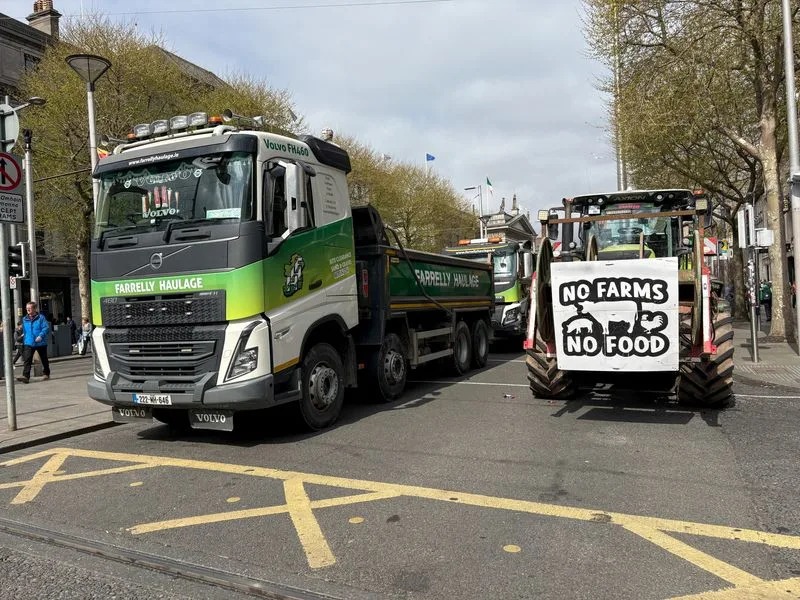 Vehicles block Dublin's O'Connell Street, as part of a protest over the high cost of fuel that clogged up busy thoroughfares and motorways across Ireland for a second successive day, in Dublin, Ireland April 8, 2026. Conor Humphries/REUTERS
By Conor Humphries and Padraic Halpin Reuters
Protesters calling for further government help to lower the cost of fuel clogged up busy thoroughfares and motorways with parked lorries and tractors across Ireland on Wednesday, disrupting commuters and public transport for a second successive day.
Convoys of vehicles began converging on Dublin’s city centre and other towns and cities on Tuesday, with protesters, including hauliers and farmers, complaining that a 250 million euro package to temporarily cut taxes on petrol and diesel did not go far enough to cushion the knock-on cost of the Middle East conflict.
“With the price we’re paying for fuel, I’m probably two months away from my business folding,” said Christopher Duffy, 46, an agricultural contractor who was part of a group blocking Dublin’s main thoroughfare of O’Connell Street that is calling for the price of diesel to be capped at a lower rate.
“It’s not a lot to ask for really… We’re just backed into a corner.”
Ministers said they would not agree to the protesters’ demands to meet with them as they did not belong to representative groups with whom the government has been engaging on supports. Organisers pledged a third day of disruption on Thursday.
“We respect people’s right to protest but what is not acceptable is people declaring that we will turn O’Connell Street into a car park,” Prime Minister Micheal Martin told a news conference.
The lining of tractors and trucks down O’Connell Street led to severe delays to bus services and the part suspension of one of the two tram lines that cross the city. Significant traffic delays were also reported at motorways leading into other major cities.
Protests at two fuel depots blocking deliveries into the cities of Galway and Limerick had led to at least one forecourt running out of fuel, the head of the representative body for forecourt operators told national broadcaster RTE.
Ireland’s government welcomed a two-week ceasefire in the Iran conflict and expected it to lead to a fall in fuel prices soon.
“If they give us that phone call or that meeting, the streets of Dublin will be cleared. If they don’t, we’ll stay as long as it’ll take,” said 61-year-old farmer and agricultural contractor John Dallon.



Leave a reply





 The Times of Earth ( TOE) founded in 1999, is a multilingual newspaper that is printed and circulated in many countries including some parts of the United States and Canada. It is considered as the largest trusted & respected international multimedia news/financial information source of the world.